
It’s the most common question we get from farmers: “Can you spray my field with a drone?”
The short answer, as of March 2026: not yet for most pesticide products — but it’s coming, and there’s plenty you can do with drones right now.
Here’s the full picture on what’s legal, what’s pending, and how to get started today.
What’s Legal Right Now
Several agricultural drone services are fully legal and available in Alberta today. No special regulatory approvals needed beyond standard commercial drone certification.
Precision Scouting & NDVI Mapping — Flying a multispectral camera over your fields to produce colour-coded crop health maps. This shows you exactly where disease, nutrient deficiency, weed pressure, or moisture stress is happening. Fully legal. We offer this at $6–$9/acre.
Livestock Thermal Monitoring — Using thermal imaging cameras to find, count, and check cattle in bush, sloughs, and remote pasture. What takes hours on an ATV takes minutes with a drone. Fully legal. We offer this at $3–$5/head or $200–$400 per farm visit.
Granular Spreading — Aerial application of dry granular products including fertilizer, seed, and biological amendments using a drone’s spreading system. This is legal now for approved products. We offer this at $12–$16/acre.
Farm Inspections & Documentation — Aerial photography and video for crop insurance claims, hail damage documentation, infrastructure surveys, and general farm aerial photography. Fully legal.
These aren’t placeholder services while we wait for spray regulations. They’re practical, money-saving tools that farms across central Alberta are using today.
What’s Pending: Health Canada PRO2026-01
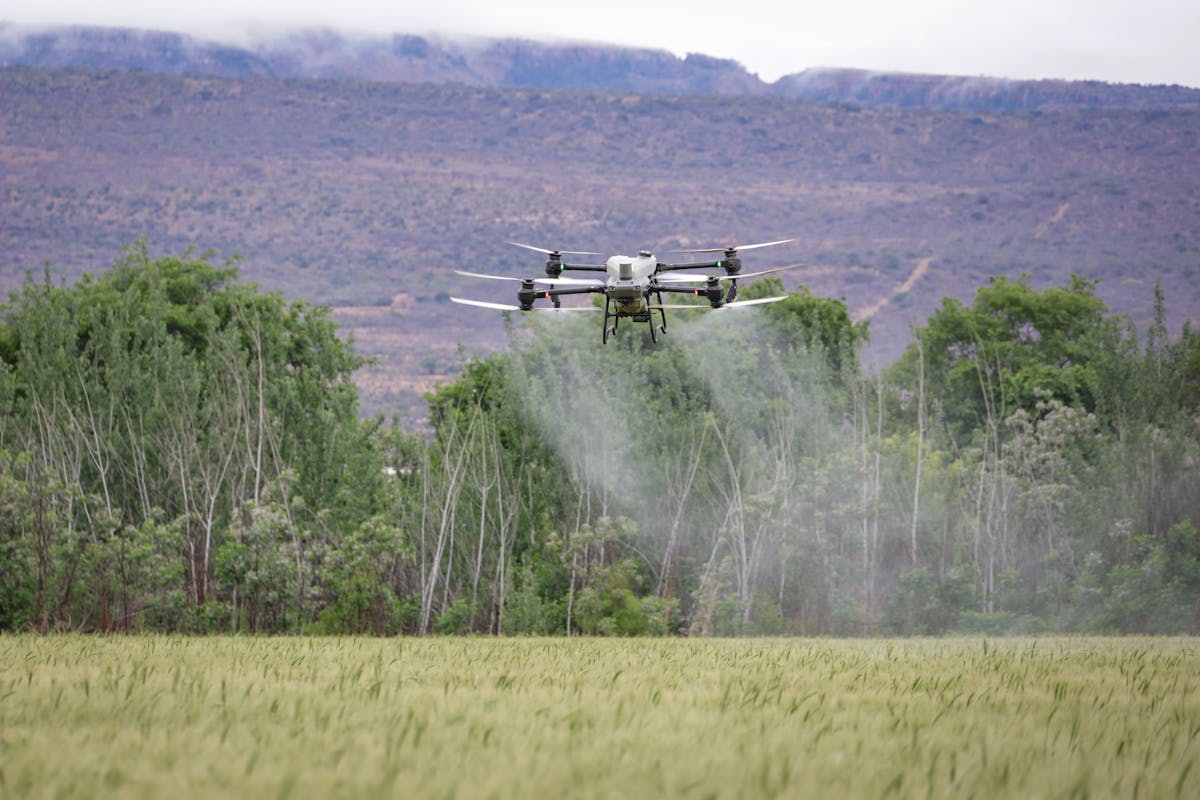
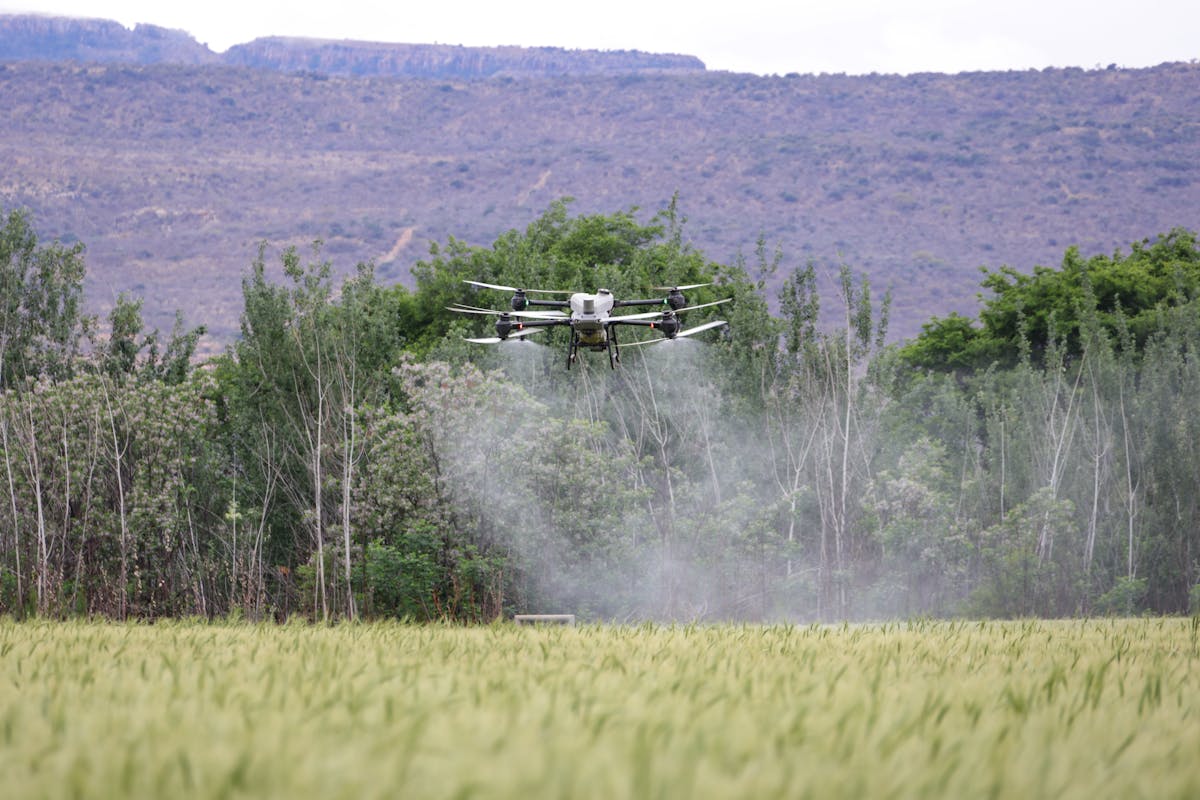
Full in-crop application of pesticides, herbicides, and fungicides by drone is currently going through the Health Canada regulatory process.
The regulation is called PRO2026-01. It’s Health Canada’s proposed framework for allowing Remotely Piloted Aircraft Systems (RPAS) to apply pest control products. This is the final regulatory step that would allow drone operators — with proper certification — to spray the same products that ground rigs and airplanes currently apply.
What PRO2026-01 covers:
- Allowing registered pest control products to be applied via RPAS
- Setting requirements for operator certification and training
- Establishing application standards (buffer zones, drift management, rate calibration)
- Defining the types of products and situations where drone application is permitted
Where it stands: The regulation has been proposed and is moving through the approval process. Based on the public timeline, approval is expected mid-2026 or later. These things can move slowly, so we’re planning conservatively.
What this means for you: Once PRO2026-01 is approved, licensed operators like AgHawk Drones will be able to apply pesticides, herbicides, and fungicides by drone — the same products your ground sprayer or aerial applicator uses now.
Why the Delay?
Canada takes a careful approach to pesticide regulation, and for good reason. Health Canada needs to evaluate:
- Drift risk — Drones fly low (2–3 metres above the crop), which actually reduces drift compared to fixed-wing aircraft. But the regulators need data to confirm this at scale.
- Application rates — Drones use ultra-low volume application (1–2 gallons per acre vs. 5–15 for ground rigs). Regulators need to verify efficacy at these rates.
- Operator standards — Ensuring that anyone spraying pesticides by drone has proper training in both drone operation and pesticide handling.
- Environmental protection — Buffer zones, sensitive areas, and aquatic setbacks need to be defined for drone application specifically.
Other countries — including China, Japan, Australia, and parts of the United States — already allow drone pesticide application. Canada is working from that existing body of evidence, which should speed things along.
What You Can Do Right Now
You don’t have to wait for full spray regulations to start getting value from agricultural drones. Here’s what makes sense today:
Scout Before You Spray
NDVI multispectral mapping shows you where problems are in your field before you spend money treating them. Instead of blanket spraying a full quarter section with fungicide, you might find that only 30% of the field needs treatment. At $20+ per acre for fungicide, that’s significant savings.
Build Your Field Data
Every scouting flight generates a detailed map of your crop health. Over time, this builds a history of your fields — where the wet spots are, where disease pressure shows up first, which areas consistently underperform. That data makes every decision better, whether you’re planning variable-rate fertilizer, choosing seed, or deciding where to put your efforts.
Get Comfortable With the Technology
When full spray regulations do arrive, farmers who’ve already worked with a drone service will be ready to take advantage immediately. You’ll know what to expect, you’ll have field maps already built, and you’ll have a working relationship with a local operator.
Use Granular Spreading Now
If you need to apply dry fertilizer, seed, or biological products in areas your ground equipment can’t reach — wet fields, steep terrain, small or irregular plots — drone spreading is legal and available today at $12–$16/acre.
What You’ll Need From Your Drone Operator
Whether you’re booking scouting now or planning ahead for spray services, here’s what to look for in a drone service provider:
- Advanced RPAS Pilot Certificate from Transport Canada (required for commercial operations)
- Commercial Pesticide Applicator Certificate from Alberta Environment (required once spray regulations are approved)
- Proper insurance — both aviation liability and commercial general liability
- Local presence — an operator based in your area who can respond quickly, not someone driving three hours from Edmonton
At AgHawk Drones, we hold both the Advanced RPAS certificate and the Alberta Commercial Pesticide Applicator Certificate. We’re based in central Alberta and serve farms throughout the Red Deer, Lacombe, Ponoka, Wetaskiwin, and Innisfail area. When PRO2026-01 is approved, we’ll be ready to spray on day one.
The Bottom Line
Drone crop spraying is coming to Alberta. The regulatory process is underway, and there’s strong momentum toward approval. In the meantime, there’s real value in drone scouting, mapping, thermal monitoring, and granular spreading — services that are fully legal and saving farmers money today.
The smart move is to start now. Scout your fields this spring. Build your data. Get to know the technology. When full spray approval comes through, you’ll be ahead of the curve instead of scrambling to figure it out.
Have questions about what’s legal for your specific situation? Get in touch — we’re happy to walk you through it. No charge, no pressure.
Ready to try drone services on your farm?
Get a free quote for scouting, mapping, spreading, or thermal monitoring across central Alberta.
Request a Free Quote